


 12:00
12:00
 Admin
Admin

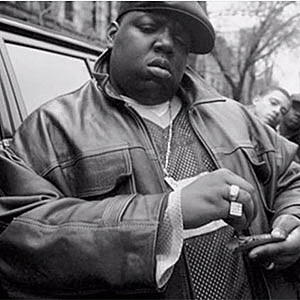
When Florida Senator Marco Rubio, a Republican, discussed his love for rap music extensively in an interview with GQ magazine.
Eyebrows were raised: The genre is not typically seen as one that
appeals to conservatives, in particular social conservatives.
Conservative columnist Mark Steyn put it as follows: “I think there’s an absence of human feeling in these songs. It’s not just that they’re explicit. When you talk to social conservatives, they get upset because there’s all these bad words in there. It’s beyond that, actually.”
Many rappers, at the same time, openly express their support for liberal politicians and policies: From Jay-Z and his wife Beyoncé raising money for President Obama, to Young Jeezy singing his praises in “My President”:
Yet at the same time — and discussions about discursive practices
aside — there is a strong undercurrent of deeply conservative thought
expressed in songs by a wide range of some of the most famous rap
artists of all. And it is not just the kind of classical-liberal
concerns over government overreach in specific policy areas (narcotics,
law enforcement) that one would expect based on the attention rap music
has received in the public debate, though there is quite a bit of that.
As I will show by analyzing the twenty-one greatest conservative rap
songs, selected based on a mix of ideological purity (primarily),
musical quality, and popular appeal, all three legs of President
Reagan’s “three-legged stool” are represented.
The songs I discuss express support not just for pro-family social values, but also for small government and peace through strength. That said, domestic policy receives more attention than foreign policy, a common feature of most contemporary popular music in the West, and partially for that reason, the relative size of the legs reflect the Republican Party’s primary electorate better than its policy platform.
Without further ado, let the ranking commence: 21 rap songs to inspire the conservative movement in the 21st century.
21. Justin Bieber featuring Busta Rhymes – Drummer Boy (2011)
The first song on the list — ranked this low mostly because of its disregard for the second criterion mentioned earlier, musical quality — is a collaborative effort by teen idol Justin Bieber and past-his-heyday rapper Busta Rhymes. A cover of “The Carol of the Drum,” the classical Christmas song by Katherine Kennicott Davis, the song tells the story of a poor drummer boy who pays tribute to the baby Jesus (“Come they told me, pa rum pa pum pum / A newborn king to see, pa rum pa pum pum.”)
But this is not just an overt endorsement of the Gospel. When Mr. Bieber turns to discussing the policy implications of 1 John 3:17 (“But if anyone has the world’s goods and sees his brother in need, yet closes his heart against him, how does God’s love abide in him?”), it is private charity, not government redistribution that he sees as the way forward:
This is what “asking the rich to pay their fair share” should look
like — not coercion through the tax system, but an appeal to humanity’s
moral core.
20. 2pac – Keep Ya Head Up (1993)
Tupac Shakur, or 2Pac, (despite?) being the son of two Black Panthers, makes more appearances (three) on this list than any other artist. In this first one, he attacks contemporary feminist beliefs, decries single-parent families, and calls on men, particularly those in his own African-American community, to step up and take responsibility. He voices Bill Cosby when discussing the latter, while at the same time reaffirming traditional gender roles (“You know what makes me unhappy / When brothers make babies, and leave a young mother to be a pappy”). While expressing compassion for single mothers raising children by themselves (“And uh, to all the ladies havin’ babies on they own / I know it’s kinda rough and you’re feelin’ all alone”), he does not see such household structures as effective alternatives to traditional families (“Time to heal our women, be real to our women / And if we don’t we’ll have a race of babies / That will hate the ladies that make the babies”). But abortion is not an acceptable, easy way out for Mr. Shakur: “And since a man can’t make one / He has no right to tell a woman when and where to create one / So will the real men get up?” His harsh criticism of men who “clown a lot” ends on a positive note, as he expresses his hope that a return to traditional values will mean that “things are gonna get easier” and “things’ll get brighter.”
19. Eminem – Role Model (1999)
Marshall Bruce Mathers III, better known by his stage name Eminem, grew up in Detroit, probably the single city to have been ravaged the most thoroughly by Democratic Party malfeasance and malgovernance. It should not come as a surprise, then, that this song from his major label debut, The Slim Shady LP, released during the Clinton administration, contains a vicious attack on the Clintons. In a mere four verses, he highlights Bill’s adultery and tenuous drug use claims, while also dedicating some choice words to his wife:
This is, of course, not necessarily how a role model should sound,
and Mr. Mathers acknowledges as much. Well aware of his own
imperfections, he carefully explains that public figures are not per se
examples to be followed, a message that should resonate with
conservatives concerned about mainstream culture:
18. Dr. Dre featuring Snoop Dogg – Still D.R.E. (1999)
In “Still D.R.E.,” from his first studio album after a seven year hiatus, Andre Romelle Young, or Dr. Dre, speaks to the value of effort and experience. He starts out by painting a picture of the skepticism he faces as an older, more experienced musician:
But just because something is hip and new it is not necessarily better (“Still the beats bang, still doing my thang / Since I left, ain’’ too much changed, still”). Hope and change are not a substitute for skill and competence: “I bring the fire till you’re soaking in your seat / It’s not a fluke, it’s been tried, I’m the truth.”
But of course, even Dr. Young’s tried and tested approach to producing
beats is of limited worth without hard work. From the moment he wakes up
till the moment he goes to sleep, his mind is focused on his
professional obligations (“Treat my rap like Cali weed, I smoke til I sleep / Wake up in the A.M., compose a beat”).
But that does not mean that he is unwilling to dedicate some of his
time to teaching, passing on the truth of the ages to new generations (“Kept my ear to the streets, signed Eminem / He’s triple platinum, doing 50 a week”). Near the end of the song, all this culminates in a warning to wannabe revolutionaries everywhere: “Dr. Dre be the name / Still running the game.”
And this extends, of course, to those who believe that a Marxist utopia
can be established through democratically endorsed redistribution of
wealth. As Dr. Young explains in “Forgot About Dre,” a song from his
next album: “If it was up to me / You motherf****** would stop
coming up to me / With your hands out lookin’ up to me / Like you want
something free.”
17. Cidinho e Doca – Rap das Armas (2007)
A common theme in the genre of rap is a glorification of gun ownership and use. At the same time, very few songs present a principled defense of Second Amendment rights; anger toward law enforcement (as in Body Count’s highly controversional 1992 record “Cop Killer”) and a thirst for wanton machismo are more dominant streaks in American rap music. 2Pac’s “Hit ‘em up” exemplifies this:
It is, remarkably, a song from Brazil that best expresses the
sentiment that gun ownership finds its ultimate justification in
self-defense against totalitarian government. “Rap das armas,” the theme
song from the movie Elite Squad, describes a neighborhood ready to
resist. For if the agents of government have all been corrupted (“Porque esses alemão são tudo safado“), yet enter your community heavily armed (“Vem um de AR15 e o outro de 12 na mão“),
what other option is there but to find Second-Amendment solutions? And
there is no way to truly enforce those rights but to match the
government’s military might: “A vizinhança dessa massa já diz que não agüenta / Na entrada da favela já tem ponto 50.”
M2 .50 caliber machine guns may be seen as weapons of war by Democratic
senators from California, but tyranny is much more easily forced upon a
populace without them.
16. Nas – I Can (2003)
Nasir bin Olu Dara Jones, or Nas, released his song “I Can” in 2003. It charted at #12 in the Billboard Hot 100, making it his highest-charting single to date. The central message of the song is that education and hard work are the path to success, not government handouts or a life of crime. Mr. Jones expresses an aspirational belief in opportunity for all (“You can be anything in the world, in God we trust”), but without effort, all of that opportunity will be squandered (“If I work hard at it (If I work hard at it) / I’ll be where I wanna be (I’ll be where I wanna be)”). He warns the young against the temptations posed by sex, drugs and ignorance:
All in all, a great message for the children that, coming shortly
after No Child Left Behind was enacted, must have pleased President
George W. Bush immensely. How does “change” come about? When individuals
live up to the demands of their personal responsibility, not when
United Nations bureaucrats issue letters expressing their disapproval.
Or in Mr. Jones’ words: “Read more, learn more, change the globe.”
15. Wyclef Jean – Perfect Gentleman (2001)
Would-be Haitian presidential candidate Wyclef Jean, whose rise to fame commenced when he was a member of New Jersey rap outfit “The Fugees” (one of his fellow Fugees, Lauryn Hill, will make multiple appearances later on), discusses the importance of adhering to ethical standards in the face of adversity in this reflection on morally ambiguous occupations. In a song dedicated to strip clubs (“I’ma send this one out to the gentlemen’s clubs”), he draws the line of acceptability well before prostitution (“Just ‘cuz she dances go-go / That don’t make her a ho, no”). Though unwilling to praise the choices strippers have made, he is not about to condemn them either, for all fall short of the glory of God (“You calling her a hooker? / He without sin cast the first stone”).
Passing judgment is further complicated by the second verse, in which a stripper named Hope (a reference to President Clinton’s activities in the Oval Office?) gives her side of the story. Her focus rests heavily on the effort and skills required for her work, as well as her ambition to redeem herself (“Have you any idea how hard this is? / I could flex in 25 positions / But I only work here to pay my tuition”). Now contrast this with the portrayal of stripclub customers presented a bit later by Mr. Jean:
It is hard not to read this juxtaposition of characters as a modern
rendition of Luke 7:36-50. And indeed, unsurprisingly, it is ultimately
the sinful woman, not the Pharisee who passes by the strip joint only to
pass judgment, who receives more love from Mr. Jean: “We gonna elope to Mexico / Called up my mama, said I’m in love with a stripper, yo.”
14. Jay-Z featuring Beanie Sigel — Where Have You Been? (2000)
Shawn Corey Carter, or Jay-Z, and Beanie Sigel pick up where 2Pac left off in “Keep Ya Head Up,” elaborating on the impact an absent father has on an adolescent’s personal development. “Where Have You Been?” is an eerie, heartwrenching account of Mr. Carter and Mr. Sigel’s experiences growing up, learning that abandonment and abuse are moral equivalents. As Mr. Sigel puts it:
Mr. Carter describes growing up in a similar situation:
Without a father figure to guide them toward adulthood, Mr. Carter
and Mr. Sigel create their own vision of manliness, turning to crime and
drugs:
It is remarkable to see how outspoken both of the rappers performing
here are in their defense of family values. Even though at the time of
writing they have worked their way up to prosperity (“mommy drivin 6′s now (yeah), I got riches now (yeah) / I bought a nice home for both of my sisters now”),
bitterness remains. Their fathers’ failure to provide them with a
stable environment at home, a loving family to rely upon, has done
irreparable damage (“Do you even remember the tender boy / you turned into a cold young man?”).
Single mothers and the children they raise are the eventual victims of
fatherhood denied, and no cunningly framed defense of alternative family
structure can change that.
13. Eminem featuring Dr. Dre – Guilty Conscience (1999)
This second appearance for both Eminem and Dr. Dre reaches back to the medieval European tradition of the morality play. In a sequence of internal dialogues playing out in the conscience of three protagonists facing an urgent dilemma, Mr. Mathers personifies Evil, while Dr. Young performs the role of Good (or at least non-Evil). “Eddie” has to decide whether to rob a liquor store and hurt its clerk; “Stan” is faced with the choice of taking advantage of an intoxicated 15-year-old; and Grady must choose the correct punishment for his adulterous wife and her lover. The latter is the only conundrum with a conclusive ending within the song: even Mr. Young, the voice of moral reasoning, ends up embracing the (appropriately medieval) retribution Mr. Mathers suggests (“What am I sayin’? Shoot ‘em both Grady, where’s your gun at?”). More importantly, in the first two segments, consequentialist and deontological modes of moral reasoning are employed to illustrate that not only do actions have consequences, they ought to be firmly rooted in ethical principles (e.g., “Man, don’t do it, it’s not worth it to risk it! / You’re right!,” versus “Yo! This girl’s only fifteen years old / You shouldn’t take advantage of her, that’s not fair”). This is not a world of moral nihilism, and say what you want about the tenets underpinning Dr. Young’s interventions, at least they suggest the existence of an ethos.
12. 2pac – Brenda Got A Baby (1991)
Most rap songs devoted to broken families place the experience of the fatherless son and the blame that rests upon the absent father at the center of their narrative. In his second appearance on this list, his debut solo single, Mr. Shakur shifts our attention to the female teen and the broader social fabric:
Brenda, the main character introduced here, is an illiterate
12-year-old born to a drug-addicted father and a negligent mother who
see her as a convenient source of welfare payments (“Who didn’t
really care to see, or give a damn if she / Went out and had a church of
kids / As long as when the check came they got first dibs”).
Growing up in an environment without communal institutions to fall back
on, she is sexually abused by her cousin, the only male figure in her
life, who impregnates her. After giving birth to her baby in the
bathroom, she considers abandoning the infant in a trash heap, but her
motherly instincts keep her from doing so. Without a social network to
fall back upon, she starts selling crack until prostitution becomes her
only attainable source of income. Even though “the social workers here everyday,”
a community fallen apart after being hit with drugs, violence, and Aid
to Families with Dependent Children can in no way keep the inevitable
tragedy from materializing: “Prostitute, found slain, and Brenda’s her name, she’s got a baby.”
11. Bone, Thugs ‘n’ Harmony – Tha Crossroads (1997)
Shortly after his passing away, Cleveland rappers Layzie Bone, Flesh-n-Bone, Bizzy Bone, Krayzie Bone, and Wish Bone (these are, indeed, stage names, not the product of fate or parental playfulness) paid tribute to Eazy-E, the rapper and former N.W.A. member who offered them their first major-label contract. “Tha Crossroads” reflects upon his death and the many others in their spheres who have died early deaths, and on the afterlife facing both them and the Bones themselves. The fundamental driving force underlying their reflections is the Will of an omnipresent, almighty God (“And whatcha gonna do / When there ain’t nowhere to hide / Tell me what / When judgment comes for you / Cause it’s gonna come for you”). Incomprehension in the face of death (“And I’m asking the good Lord “Why?” / He sigh, he told me we live to die”) does not subtract from their faith in a higher authority or their willingness to obey his prescriptions (“God bless you working on a plan to Heaven / Follow the Lord all 24/7 days, God is who we praise”). How then does one respond to adversity?
There it is. There is “no mercy for thugs,” and eventually, we arrive at “tha crossroads.” Repent and change your ways before your time comes, and you will find eternal solace.
10. Kanye West – Jesus Walks (2004)
Another song that openly embraces religion in a way that is anathema to most “mainstream” cultural products is vivid proof of some of the suspicions many conservatives hold toward the sentinels of the movie and musical industry. Mr. West produced the first demos of this gospel-inspired exaltation of the baby Jesus years before its eventual release date, but met heavy resistance in his search for interested record labels. In his own words:
His criticisms of the liberal media establishment do not distract
from the core message of the song: That Jesus Christ is his Lord and
Savior, and that he “walks” with everyone. His guidance is indispensable, for “the Devil trying to break me down.” And when he says everyone, he truly meets everyone, including the “victims of welfare,”
brought to their knees by generations of at times well-intentioned
liberal politicians who believe that throwing money at the problem is
always the solution.
9. Lauryn Hill – Doo Wop (That Thing) (1998)
Pro-abstinence policies are a favorite target of liberal pundits. Former Fugees member Lauryn Hill, most recently in the news after being sentenced to a 3-month prison term for tax evasion (raising questions as to whether the IRS targeted her for her conservative leanings, or whether she was jailed for her history of posting videos to YouTube), views them differently:
Instead of surrender in the face of temptation, Ms. Hill recommends modesty in dress:
Similar lessons apply for men. Instead of being “more concerned with his rims and his Timbs than his women,” they need to cease being “quick to shoot the semen, stop acting like boys and be men.”
8. Warren G featuring Nate Dogg – Regulate (1994)
Transforming the government into a middle-class insurance company that regulates light bulb type and soda cup size inevitable distracts it from its core functions. Upholding the rule of law, enforcing property rights, and effectively exercising a monopoly on violence are among those core functions. Warren Griffin III, or Warren G, and Nathaniel Dwayne Hall, or Nate Dogg, describe what society looks like when those functions fall victim to rampant government expansion in this song from the soundtrack to the movie Above The Rim. More specifically, Mr. Griffin falls victim to a carjacking in his own community:
Mr. Griffin sees no obvious way out of this — law enforcement is nowhere to be seen — until Mr. Hall appears (“If I had wings I could fly / let me contemplate / I glanced in the cut and I see my homey Nate“). In the absence of a government capable of enforcing the rule of law, a spontaneous order emerges:
The initial set of property rights has been protected, and the song
ends on an optimistic note, as the Long Beach Crips have taken it upon
themselves to assure that anarchy will not reign: “213 will regulate.”
7. Lauryn Hill featuring Carlos Santana – To Zion (1998)
The second song from Ms. Hill’s album The Miseducation of Lauryn Hill to be featured on this list is a strident anti-abortion anthem, a declaration of love to her son, Zion, and an expression of gratitude for the divine gift of life. On the abortion “option,” Ms. Hill has the following to say, despite the father being a married man:
The Biblical associations Ms. Hill’s son’s name, Zion, evokes are exploited fully. When she speaks of the “joy of my world” or “a gift so great,”
whether she refers to her son specifically or to God’s love and
generosity more generally is utterly unclear. But that is exactly the
point.
6. Jay-Z – 99 Problems (2004)
Constitutional conservatism is on the rise, with Texas Senator Ted Cruz as its standard-bearer, and Mr. Carter must be pleased. This song is an outspoken defense of Fourth Amendment rights, and has been analyzed as such by law school professors. The second verse portrays a traffic stop: Mr. Carter has been caught speeding (“Well you was doing fifty-five in a fifty-four“), and he is worried that the illegal drugs in the trunk of his car (“In my trunk is raw“) will be found by the police officer who stopped him. Though the legal details are not entirely accurate, Mr. Carter’s forceful insistence on due process makes the arrival of a K9 unit and the detection of illicit drugs a requirement for a search of his trunk to be admissible. The K9 unit never arrives, hence the triumphant chorus (“I got 99 problems, but a bitch ain’t one“). A victory for the guilty, but a victory for individual rights in the face of discretionary law enforcement as well.
(On a sidenote, when Mr. Carter performed this song at the inaugural Staff Ball, celebrating president Obama’s victory, he and 4,000 Obama campaign operatives changed the word “bitch” in the chorus to “Bush,” as a part of their never-ending struggle for a new civility in the public arena.)
5. 2Pac – Dear Mama (1995)
In his third and last placing on this list, Mr. Shakur continues his exploration of family life on the brink of societal collapse. A retrospective on his mother’s attempts to provide for him and to raise him, it touches upon many by now familiar themes. There are the intrinsic hardships a single mother, especially a poor single mother faces:
Of course, Mr. Shakur’s own behavior, driven to an extent by the absence of a male father figure (“They say I’m wrong and I’m heartless, but all along / I was lookin’ for a father he was gone“),
did not help. Welcomed into a gang, one of the few mediating
institutions available in the absence of a functioning civil society, he
starts dealing drugs:
We know, by now, how it all ends: Mr. Shakur becomes successful, and
gets the chance to give back to his struggling mother. It could all have
been different; and his father deserves nor receives any credit for
putting him in a position where he had the opportunity to produce some
of the greatest rap songs of all time.
4. Will Smith featuring Coko — Men In Black (1997)
Pretty much all of the songs on this list have one, clear, unambiguous conservative reading to offer. “Men in Black,” from the movie by the same name, on the other hand, illustrates both a more authoritarian and a libertarian approach to national security. The national-security state, reviled by the likes of Kentucky Senator Rand Paul, embraced by Arizona Senator John McCain, is praised in this upbeat song about a shadowy law enforcement agency, dressed in black, that protects the people from extraterrestrial threats.
A superficial reading suggests explicit support for an executive branch so unitary, no one outside of it is entitled even to memories of its actions (“Here come the Men in Black / Galaxy defenders / Here come the Men in Black / They won’t let you remember”). The agency officials are not subject to any kind of democratic control (“But yo we ain’t on no government list / We straight don’t exist, no names and no fingerprints”), yet watch over everyone and everything, presumably including AP and FNC reporters (“Cameras zoom, on the impending doom / But then like boom black suits fill the room up”).
Of course, this over-the-top portrayal of a benevolent government capable of providing complete security without any checks or balances invites a different reading as well. The listener is reminded of the skepticism he ought to feel (“So go witcha life, forget that Roswell crap / Show love to the black suit”), but told not to worry (“But trust me if we ever show in your section / Believe me, it’s for your own protection”). That is obviously not an order free citizens ought to obey: putting up a 13-hour filibuster is the least one can do to demand transparency and openness from the Men in Black.
3. Daddy Yankee – Gasolina (2004)
Ramón Luis Ayala Rodríguez, or Daddy Yankee, is the only artist on this list to have actively campaigned for a Republican presidential candidate (John McCain, in 2008). Named one of the 100 most influential people in the world by Time magazine in 2006, Daddy Yankee’s song focuses more specifically on one particular policy area than any other song on this list. In Mr. Rodríguez’s own words, it is about “energy independence.” But it is not a flimsy all-of-the-above with massive transfers of wealth to campaign donors who invest in Solyndras that he is referring to with that term. “Drill, baby, drill” is his policy proposal, which, of course, dovetailed well with former Alaska Governor Sarah Palin’s use of that chant during the 2008 campaign. It is hard not to think of the female voice in the song as a Governor Palin avant la lettre when she sings “Dame más gasolina.” And when Mr. Rodriguéz requests a tribute to the internal combustion engine (“Zúmbale mambo pa’ que mis gatas prendan los motores”), she is the one who responds (“Ella prende las turbinas”). Given all this, listening to this song a decade later, it is hard not to hear a call for more fracking.
2. Jay Sean featuring Pitbull – I’m All Yours (2012)
Senator Rubio, the Republican from Florida, believes that Pitbull, formerly Mr. 305, now Mr. Worldwide, only produces “party songs.” In a December 2012 GQ interview he went on to state: “There’s no message for him, compared to like an Eminem. But look, there’s always been a role for that in American music. There’s always been a party person, but he’s a young guy. You know, maybe as he gets older, he’ll reflect in his music more as time goes on. I mean, he’s not Tupac.” Senator Rubio may want to reconsider those words, as “I’m All Yours,” Pitbull’s collaborative effort with Jay Sean, contradicts them strikingly. Not only is it an aggressive tribute to lifelong faithfulness (“Girl I want this for the rest of my life / I’m all yours”), it also attacks the totalitarian Castro regime (“My mind is free / Opposite of Cuba”). Senator Rubio may expect rap lyrics to contain detailed corporate tax reform proposals, but this is as good as it gets.
1. The Notorious B.I.G. – Juicy (1994)
“Of course,” you’re thinking. “I knew all along.” The sine qua non of conservative rap, by Christopher George Latore Wallace. A classical rags-to-riches story, The Notorious B.I.G.’s solo debut single is an unapologetic tribute to the Republican Party’s domestic policy agenda. After denouncing the soft bigotry of low expectations (“This album is dedicated to all the teachers that told me I’d never amount to nothin’”), Mr. Wallace reviews how he “made the change from a common thief / to up close and personal with Robin Leach.” Growing up in modest circumstances, personal and professional success “was all a dream,” but this American Dream did eventually come to fruition, home ownership in the land of plenty included (“Condos in Queens, indo for weeks”). Despite an adolescence marked by financial struggles (“We used to fuss when the landlord dissed us / No heat, wonder why Christmas missed us”), Mr. Wallace has become one of those job creators subject to the top marginal income tax rate:
Life has treated him well, thanks to his skillful hard work (“Now I’m in the limelight / ’cause I rhyme tight / Time to get paid”),
and this earned success is cause for celebration, as it has brought an
end to his participation in a culture of dependence on Big Government: “Celebratin’ every day, no more public housin’.” But it doesn’t end there: Mr. Wallace now helps the less fortunate with private charity (“And I’m far from cheap, I smoke skunk with my peeps all day / Spread love, it’s the Brooklyn way”). And this dream is open to all who dare dream: “You know very well who you are / Don’t let ‘em hold you down, reach for the stars.”
And that’s the list! I hope it has been an enjoyable read. Of course the precise ranking here was, to a certain extent, arbitrary, but that seems unavoidable in such situations. And of course, there are songs that I was forced to leave off, for there is a plethora of conservative rap music out there. Think of Sir Mix-A-Lot’s “No Holds Barred,” a stirring defense of the right to (armed) self-defense, or Kat Dahlia’s “Gangsta,” a tribute to rugged individualism (“You say you a gangsta, that don’t impress me none / You say you a gangsta, ain’t seen a thing you done / I do it all on myself, I ain’t getting help/ From no one, from no one”) that includes a nice reference to Ronald Reagan’s moment of spark that led him to victory in the New Hamsphire primary in 1980 (“I’m paying for this session”).
In any case, I believe this exercise has been valuable, for there are more people than I thought who cling to bitter, narrow conceptions of textual analysis. In this rambling rant on The New Republic’s website, for example, two adult males assert time and time again that auctorial intent is the only possible source of meaning. This leads to fascinating lines of reasoning. Take the following example: Beanie Siegel has committed many violent crimes, hence he is a liberal, and hence his songs must be liberal. This is an extreme position that I am unwilling to adopt, but one that flows quite naturally from the typical five-year-old’s views on discourse analysis. A more nuanced view lends itself better to the production of fruitful interpretations. As Jacques Derrida said in 1968: “La signification ne s’annonce qu’à partir du fonctionnement d’un réseau d’oppositions et de distinctions; c’est-à-dire de différences – sans termes positives.” Indeed. If you’re one of those bitter clingers, one of those Taliban of text linguistics, a semiotic Stalinist, take his wise words to heart and listen to some conservative rap again. Conveniently, here’s a Spotify playlist for you.
Conservative columnist Mark Steyn put it as follows: “I think there’s an absence of human feeling in these songs. It’s not just that they’re explicit. When you talk to social conservatives, they get upset because there’s all these bad words in there. It’s beyond that, actually.”
Many rappers, at the same time, openly express their support for liberal politicians and policies: From Jay-Z and his wife Beyoncé raising money for President Obama, to Young Jeezy singing his praises in “My President”:
My president is black, my Lambo’s blue
And I’ll be godd***** if my rims ain’t too
(…)
Mr. Black President, yo Obama for real
They gotta put your face on the five-thousand dollar bill
The songs I discuss express support not just for pro-family social values, but also for small government and peace through strength. That said, domestic policy receives more attention than foreign policy, a common feature of most contemporary popular music in the West, and partially for that reason, the relative size of the legs reflect the Republican Party’s primary electorate better than its policy platform.
Without further ado, let the ranking commence: 21 rap songs to inspire the conservative movement in the 21st century.
21. Justin Bieber featuring Busta Rhymes – Drummer Boy (2011)
The first song on the list — ranked this low mostly because of its disregard for the second criterion mentioned earlier, musical quality — is a collaborative effort by teen idol Justin Bieber and past-his-heyday rapper Busta Rhymes. A cover of “The Carol of the Drum,” the classical Christmas song by Katherine Kennicott Davis, the song tells the story of a poor drummer boy who pays tribute to the baby Jesus (“Come they told me, pa rum pa pum pum / A newborn king to see, pa rum pa pum pum.”)
But this is not just an overt endorsement of the Gospel. When Mr. Bieber turns to discussing the policy implications of 1 John 3:17 (“But if anyone has the world’s goods and sees his brother in need, yet closes his heart against him, how does God’s love abide in him?”), it is private charity, not government redistribution that he sees as the way forward:
It’s crazy how some people say, say they don’t care,
When there’s people on the street with no food; it’s not fair.
It’s about time for you to act merrily;
It’s about time for you to give to charity.
(…)
So I think some of you need to act bold;
Give a can to a drive, let’s change the globe.
20. 2pac – Keep Ya Head Up (1993)
Tupac Shakur, or 2Pac, (despite?) being the son of two Black Panthers, makes more appearances (three) on this list than any other artist. In this first one, he attacks contemporary feminist beliefs, decries single-parent families, and calls on men, particularly those in his own African-American community, to step up and take responsibility. He voices Bill Cosby when discussing the latter, while at the same time reaffirming traditional gender roles (“You know what makes me unhappy / When brothers make babies, and leave a young mother to be a pappy”). While expressing compassion for single mothers raising children by themselves (“And uh, to all the ladies havin’ babies on they own / I know it’s kinda rough and you’re feelin’ all alone”), he does not see such household structures as effective alternatives to traditional families (“Time to heal our women, be real to our women / And if we don’t we’ll have a race of babies / That will hate the ladies that make the babies”). But abortion is not an acceptable, easy way out for Mr. Shakur: “And since a man can’t make one / He has no right to tell a woman when and where to create one / So will the real men get up?” His harsh criticism of men who “clown a lot” ends on a positive note, as he expresses his hope that a return to traditional values will mean that “things are gonna get easier” and “things’ll get brighter.”
19. Eminem – Role Model (1999)
Marshall Bruce Mathers III, better known by his stage name Eminem, grew up in Detroit, probably the single city to have been ravaged the most thoroughly by Democratic Party malfeasance and malgovernance. It should not come as a surprise, then, that this song from his major label debut, The Slim Shady LP, released during the Clinton administration, contains a vicious attack on the Clintons. In a mere four verses, he highlights Bill’s adultery and tenuous drug use claims, while also dedicating some choice words to his wife:
So if I said I never did drugs
That would mean I lie AND get f***** more than the President does
Hillary Clinton tried to slap me and call me a pervert
I ripped her f****** tonsils out and fed her sherbet (B****!)
I get a clean shave, bathe, go to a rave
Die from an overdose and dig myself up out of my grave
My middle finger won’t go down, how do I wave?
And this is how I’m supposed to teach kids how to behave?
In “Still D.R.E.,” from his first studio album after a seven year hiatus, Andre Romelle Young, or Dr. Dre, speaks to the value of effort and experience. He starts out by painting a picture of the skepticism he faces as an older, more experienced musician:
Ladies, they pay homage, but haters say Dre fell off
How n****? My last album was “The Chronic” (n****)
They want to know if he still got it
They say rap’s changed, they want to know how I feel about it
17. Cidinho e Doca – Rap das Armas (2007)
A common theme in the genre of rap is a glorification of gun ownership and use. At the same time, very few songs present a principled defense of Second Amendment rights; anger toward law enforcement (as in Body Count’s highly controversional 1992 record “Cop Killer”) and a thirst for wanton machismo are more dominant streaks in American rap music. 2Pac’s “Hit ‘em up” exemplifies this:
Five shots couldn’t drop me
I took it and smiled
Now I’m back to set the record straight
With my A-K
I’m still the thug that you love to hate
Motherf***** I’ll Hit ‘Em Up
16. Nas – I Can (2003)
Nasir bin Olu Dara Jones, or Nas, released his song “I Can” in 2003. It charted at #12 in the Billboard Hot 100, making it his highest-charting single to date. The central message of the song is that education and hard work are the path to success, not government handouts or a life of crime. Mr. Jones expresses an aspirational belief in opportunity for all (“You can be anything in the world, in God we trust”), but without effort, all of that opportunity will be squandered (“If I work hard at it (If I work hard at it) / I’ll be where I wanna be (I’ll be where I wanna be)”). He warns the young against the temptations posed by sex, drugs and ignorance:
Hung with the wrong person
Got her strung on that
Heroin, cocaine, sniffin’ up drugs all in her nose
Coulda died, so young, now looks ugly and old
(…)
Whatever you decide, be careful, some men be
Rapists, so act your age, don’t pretend to be
Older than you are, give yourself time to grow
(…)
Young boys, you can use a lot of help, you know
You thinkin’ life’s all about smokin’ weed and ice
You don’t wanna be my age and can’t read and write
15. Wyclef Jean – Perfect Gentleman (2001)
Would-be Haitian presidential candidate Wyclef Jean, whose rise to fame commenced when he was a member of New Jersey rap outfit “The Fugees” (one of his fellow Fugees, Lauryn Hill, will make multiple appearances later on), discusses the importance of adhering to ethical standards in the face of adversity in this reflection on morally ambiguous occupations. In a song dedicated to strip clubs (“I’ma send this one out to the gentlemen’s clubs”), he draws the line of acceptability well before prostitution (“Just ‘cuz she dances go-go / That don’t make her a ho, no”). Though unwilling to praise the choices strippers have made, he is not about to condemn them either, for all fall short of the glory of God (“You calling her a hooker? / He without sin cast the first stone”).
Passing judgment is further complicated by the second verse, in which a stripper named Hope (a reference to President Clinton’s activities in the Oval Office?) gives her side of the story. Her focus rests heavily on the effort and skills required for her work, as well as her ambition to redeem herself (“Have you any idea how hard this is? / I could flex in 25 positions / But I only work here to pay my tuition”). Now contrast this with the portrayal of stripclub customers presented a bit later by Mr. Jean:
Talking about, ‘I, I don’t be going to the strip joints’
You’re lying man! You’d be surprised who you see up in there man.
14. Jay-Z featuring Beanie Sigel — Where Have You Been? (2000)
Shawn Corey Carter, or Jay-Z, and Beanie Sigel pick up where 2Pac left off in “Keep Ya Head Up,” elaborating on the impact an absent father has on an adolescent’s personal development. “Where Have You Been?” is an eerie, heartwrenching account of Mr. Carter and Mr. Sigel’s experiences growing up, learning that abandonment and abuse are moral equivalents. As Mr. Sigel puts it:
We never pitched or kicked at a ball
dog, you never taught me s***
how to fight, ride a bike, fix a flat
none of that sorts of s***
N**** you was an abusive pops
f*** you left me out to dry, stuck
You said that you was comin’ through
I would stay in the hallway (waitin’)
always playin the bench (waitin’)
and that day came and went
F*** you very much you showed me the worst kind of pain
I ‘member that day you showed me that gat, that 9
put it in my palm when I was young
and said that would be mine, you turned me out
the reason why I hit the block
reason why I tried to hit them cops
reason why I started hittin’ shots
reason why I started gettin’ licked
and drinkin’ syrup and skippin’ court
13. Eminem featuring Dr. Dre – Guilty Conscience (1999)
This second appearance for both Eminem and Dr. Dre reaches back to the medieval European tradition of the morality play. In a sequence of internal dialogues playing out in the conscience of three protagonists facing an urgent dilemma, Mr. Mathers personifies Evil, while Dr. Young performs the role of Good (or at least non-Evil). “Eddie” has to decide whether to rob a liquor store and hurt its clerk; “Stan” is faced with the choice of taking advantage of an intoxicated 15-year-old; and Grady must choose the correct punishment for his adulterous wife and her lover. The latter is the only conundrum with a conclusive ending within the song: even Mr. Young, the voice of moral reasoning, ends up embracing the (appropriately medieval) retribution Mr. Mathers suggests (“What am I sayin’? Shoot ‘em both Grady, where’s your gun at?”). More importantly, in the first two segments, consequentialist and deontological modes of moral reasoning are employed to illustrate that not only do actions have consequences, they ought to be firmly rooted in ethical principles (e.g., “Man, don’t do it, it’s not worth it to risk it! / You’re right!,” versus “Yo! This girl’s only fifteen years old / You shouldn’t take advantage of her, that’s not fair”). This is not a world of moral nihilism, and say what you want about the tenets underpinning Dr. Young’s interventions, at least they suggest the existence of an ethos.
12. 2pac – Brenda Got A Baby (1991)
Most rap songs devoted to broken families place the experience of the fatherless son and the blame that rests upon the absent father at the center of their narrative. In his second appearance on this list, his debut solo single, Mr. Shakur shifts our attention to the female teen and the broader social fabric:
I hear Brenda’s got a baby
But, Brenda’s barely got a brain
A d*** shame
The girl can hardly spell her name
(That’s not our problem, that’s up to Brenda’s family)
Well let me show ya how it affects the whole community
11. Bone, Thugs ‘n’ Harmony – Tha Crossroads (1997)
Shortly after his passing away, Cleveland rappers Layzie Bone, Flesh-n-Bone, Bizzy Bone, Krayzie Bone, and Wish Bone (these are, indeed, stage names, not the product of fate or parental playfulness) paid tribute to Eazy-E, the rapper and former N.W.A. member who offered them their first major-label contract. “Tha Crossroads” reflects upon his death and the many others in their spheres who have died early deaths, and on the afterlife facing both them and the Bones themselves. The fundamental driving force underlying their reflections is the Will of an omnipresent, almighty God (“And whatcha gonna do / When there ain’t nowhere to hide / Tell me what / When judgment comes for you / Cause it’s gonna come for you”). Incomprehension in the face of death (“And I’m asking the good Lord “Why?” / He sigh, he told me we live to die”) does not subtract from their faith in a higher authority or their willingness to obey his prescriptions (“God bless you working on a plan to Heaven / Follow the Lord all 24/7 days, God is who we praise”). How then does one respond to adversity?
Pray, and we pray and we pray, and we pray, and we pray
Everyday, everyday, everyday, everyday
and we pray, and we pray, and we pray, and we pray
10. Kanye West – Jesus Walks (2004)
Another song that openly embraces religion in a way that is anathema to most “mainstream” cultural products is vivid proof of some of the suspicions many conservatives hold toward the sentinels of the movie and musical industry. Mr. West produced the first demos of this gospel-inspired exaltation of the baby Jesus years before its eventual release date, but met heavy resistance in his search for interested record labels. In his own words:
They say you can rap about anything except for Jesus
That means guns, sex, lies, video tapes
But if I talk about God my record won’t get played, huh?
9. Lauryn Hill – Doo Wop (That Thing) (1998)
Pro-abstinence policies are a favorite target of liberal pundits. Former Fugees member Lauryn Hill, most recently in the news after being sentenced to a 3-month prison term for tax evasion (raising questions as to whether the IRS targeted her for her conservative leanings, or whether she was jailed for her history of posting videos to YouTube), views them differently:
Plus when you give it up so easy you ain’t even fooling him
If you did it then, then you probably f*** again
Talking out your neck sayin’ you’re a Christian
A Muslim sleeping with the gin
Now that was the sin that did Jezebel in
Showing off your a** ’cause you’re thinking it’s a trend
Girlfriend, let me break it down for you again
It’s silly when girls sell their soul because it’s in
Look at where you be in hair weaves like Europeans
Fake nails done by Koreans
8. Warren G featuring Nate Dogg – Regulate (1994)
Transforming the government into a middle-class insurance company that regulates light bulb type and soda cup size inevitable distracts it from its core functions. Upholding the rule of law, enforcing property rights, and effectively exercising a monopoly on violence are among those core functions. Warren Griffin III, or Warren G, and Nathaniel Dwayne Hall, or Nate Dogg, describe what society looks like when those functions fall victim to rampant government expansion in this song from the soundtrack to the movie Above The Rim. More specifically, Mr. Griffin falls victim to a carjacking in his own community:
I’m gettin jacked, I’m breakin myself
I can’t believe they taking Warren’s wealth
(…)
They got guns to my head
I think I’m going down
I can’t believe this happenin’ in my own town
Sixteen in the clip and one in the hole
Nate Dogg is about to make some bodies turn cold
Now they droppin’ and yellin’
It’s a tad bit late
Nate Dogg and Warren G had to regulate
7. Lauryn Hill featuring Carlos Santana – To Zion (1998)
The second song from Ms. Hill’s album The Miseducation of Lauryn Hill to be featured on this list is a strident anti-abortion anthem, a declaration of love to her son, Zion, and an expression of gratitude for the divine gift of life. On the abortion “option,” Ms. Hill has the following to say, despite the father being a married man:
I knew his life deserved a chance
But everybody told me to be smart
Look at your career they said,
“Lauryn, baby use your head”
But instead I chose to use my heart
6. Jay-Z – 99 Problems (2004)
Constitutional conservatism is on the rise, with Texas Senator Ted Cruz as its standard-bearer, and Mr. Carter must be pleased. This song is an outspoken defense of Fourth Amendment rights, and has been analyzed as such by law school professors. The second verse portrays a traffic stop: Mr. Carter has been caught speeding (“Well you was doing fifty-five in a fifty-four“), and he is worried that the illegal drugs in the trunk of his car (“In my trunk is raw“) will be found by the police officer who stopped him. Though the legal details are not entirely accurate, Mr. Carter’s forceful insistence on due process makes the arrival of a K9 unit and the detection of illicit drugs a requirement for a search of his trunk to be admissible. The K9 unit never arrives, hence the triumphant chorus (“I got 99 problems, but a bitch ain’t one“). A victory for the guilty, but a victory for individual rights in the face of discretionary law enforcement as well.
(On a sidenote, when Mr. Carter performed this song at the inaugural Staff Ball, celebrating president Obama’s victory, he and 4,000 Obama campaign operatives changed the word “bitch” in the chorus to “Bush,” as a part of their never-ending struggle for a new civility in the public arena.)
5. 2Pac – Dear Mama (1995)
In his third and last placing on this list, Mr. Shakur continues his exploration of family life on the brink of societal collapse. A retrospective on his mother’s attempts to provide for him and to raise him, it touches upon many by now familiar themes. There are the intrinsic hardships a single mother, especially a poor single mother faces:
I finally understand
for a woman it ain’t easy tryin’ to raise a man
You always was committed
A poor single mother on welfare, tell me how ya did it
(…)
And I could see you comin’ home after work late
You’re in the kitchen tryin to fix us a hot plate
Ya just workin’ with the scraps you was given
And mama made miracles every Thanksgivin’
I hung around with the thugs, and even though they sold drugs
They showed a young brother love
I moved out and started really hangin’
I needed money of my own so I started slangin’
4. Will Smith featuring Coko — Men In Black (1997)
Pretty much all of the songs on this list have one, clear, unambiguous conservative reading to offer. “Men in Black,” from the movie by the same name, on the other hand, illustrates both a more authoritarian and a libertarian approach to national security. The national-security state, reviled by the likes of Kentucky Senator Rand Paul, embraced by Arizona Senator John McCain, is praised in this upbeat song about a shadowy law enforcement agency, dressed in black, that protects the people from extraterrestrial threats.
A superficial reading suggests explicit support for an executive branch so unitary, no one outside of it is entitled even to memories of its actions (“Here come the Men in Black / Galaxy defenders / Here come the Men in Black / They won’t let you remember”). The agency officials are not subject to any kind of democratic control (“But yo we ain’t on no government list / We straight don’t exist, no names and no fingerprints”), yet watch over everyone and everything, presumably including AP and FNC reporters (“Cameras zoom, on the impending doom / But then like boom black suits fill the room up”).
Of course, this over-the-top portrayal of a benevolent government capable of providing complete security without any checks or balances invites a different reading as well. The listener is reminded of the skepticism he ought to feel (“So go witcha life, forget that Roswell crap / Show love to the black suit”), but told not to worry (“But trust me if we ever show in your section / Believe me, it’s for your own protection”). That is obviously not an order free citizens ought to obey: putting up a 13-hour filibuster is the least one can do to demand transparency and openness from the Men in Black.
3. Daddy Yankee – Gasolina (2004)
Ramón Luis Ayala Rodríguez, or Daddy Yankee, is the only artist on this list to have actively campaigned for a Republican presidential candidate (John McCain, in 2008). Named one of the 100 most influential people in the world by Time magazine in 2006, Daddy Yankee’s song focuses more specifically on one particular policy area than any other song on this list. In Mr. Rodríguez’s own words, it is about “energy independence.” But it is not a flimsy all-of-the-above with massive transfers of wealth to campaign donors who invest in Solyndras that he is referring to with that term. “Drill, baby, drill” is his policy proposal, which, of course, dovetailed well with former Alaska Governor Sarah Palin’s use of that chant during the 2008 campaign. It is hard not to think of the female voice in the song as a Governor Palin avant la lettre when she sings “Dame más gasolina.” And when Mr. Rodriguéz requests a tribute to the internal combustion engine (“Zúmbale mambo pa’ que mis gatas prendan los motores”), she is the one who responds (“Ella prende las turbinas”). Given all this, listening to this song a decade later, it is hard not to hear a call for more fracking.
2. Jay Sean featuring Pitbull – I’m All Yours (2012)
Senator Rubio, the Republican from Florida, believes that Pitbull, formerly Mr. 305, now Mr. Worldwide, only produces “party songs.” In a December 2012 GQ interview he went on to state: “There’s no message for him, compared to like an Eminem. But look, there’s always been a role for that in American music. There’s always been a party person, but he’s a young guy. You know, maybe as he gets older, he’ll reflect in his music more as time goes on. I mean, he’s not Tupac.” Senator Rubio may want to reconsider those words, as “I’m All Yours,” Pitbull’s collaborative effort with Jay Sean, contradicts them strikingly. Not only is it an aggressive tribute to lifelong faithfulness (“Girl I want this for the rest of my life / I’m all yours”), it also attacks the totalitarian Castro regime (“My mind is free / Opposite of Cuba”). Senator Rubio may expect rap lyrics to contain detailed corporate tax reform proposals, but this is as good as it gets.
1. The Notorious B.I.G. – Juicy (1994)
“Of course,” you’re thinking. “I knew all along.” The sine qua non of conservative rap, by Christopher George Latore Wallace. A classical rags-to-riches story, The Notorious B.I.G.’s solo debut single is an unapologetic tribute to the Republican Party’s domestic policy agenda. After denouncing the soft bigotry of low expectations (“This album is dedicated to all the teachers that told me I’d never amount to nothin’”), Mr. Wallace reviews how he “made the change from a common thief / to up close and personal with Robin Leach.” Growing up in modest circumstances, personal and professional success “was all a dream,” but this American Dream did eventually come to fruition, home ownership in the land of plenty included (“Condos in Queens, indo for weeks”). Despite an adolescence marked by financial struggles (“We used to fuss when the landlord dissed us / No heat, wonder why Christmas missed us”), Mr. Wallace has become one of those job creators subject to the top marginal income tax rate:
50 inch screen, money green leather sofa
Got two rides, a limousine with a chauffeur
Phone bill about two G’s flat
No need to worry, my accountant handles that
And that’s the list! I hope it has been an enjoyable read. Of course the precise ranking here was, to a certain extent, arbitrary, but that seems unavoidable in such situations. And of course, there are songs that I was forced to leave off, for there is a plethora of conservative rap music out there. Think of Sir Mix-A-Lot’s “No Holds Barred,” a stirring defense of the right to (armed) self-defense, or Kat Dahlia’s “Gangsta,” a tribute to rugged individualism (“You say you a gangsta, that don’t impress me none / You say you a gangsta, ain’t seen a thing you done / I do it all on myself, I ain’t getting help/ From no one, from no one”) that includes a nice reference to Ronald Reagan’s moment of spark that led him to victory in the New Hamsphire primary in 1980 (“I’m paying for this session”).
In any case, I believe this exercise has been valuable, for there are more people than I thought who cling to bitter, narrow conceptions of textual analysis. In this rambling rant on The New Republic’s website, for example, two adult males assert time and time again that auctorial intent is the only possible source of meaning. This leads to fascinating lines of reasoning. Take the following example: Beanie Siegel has committed many violent crimes, hence he is a liberal, and hence his songs must be liberal. This is an extreme position that I am unwilling to adopt, but one that flows quite naturally from the typical five-year-old’s views on discourse analysis. A more nuanced view lends itself better to the production of fruitful interpretations. As Jacques Derrida said in 1968: “La signification ne s’annonce qu’à partir du fonctionnement d’un réseau d’oppositions et de distinctions; c’est-à-dire de différences – sans termes positives.” Indeed. If you’re one of those bitter clingers, one of those Taliban of text linguistics, a semiotic Stalinist, take his wise words to heart and listen to some conservative rap again. Conveniently, here’s a Spotify playlist for you.



 United Kingdom
 United States
 Germany


